
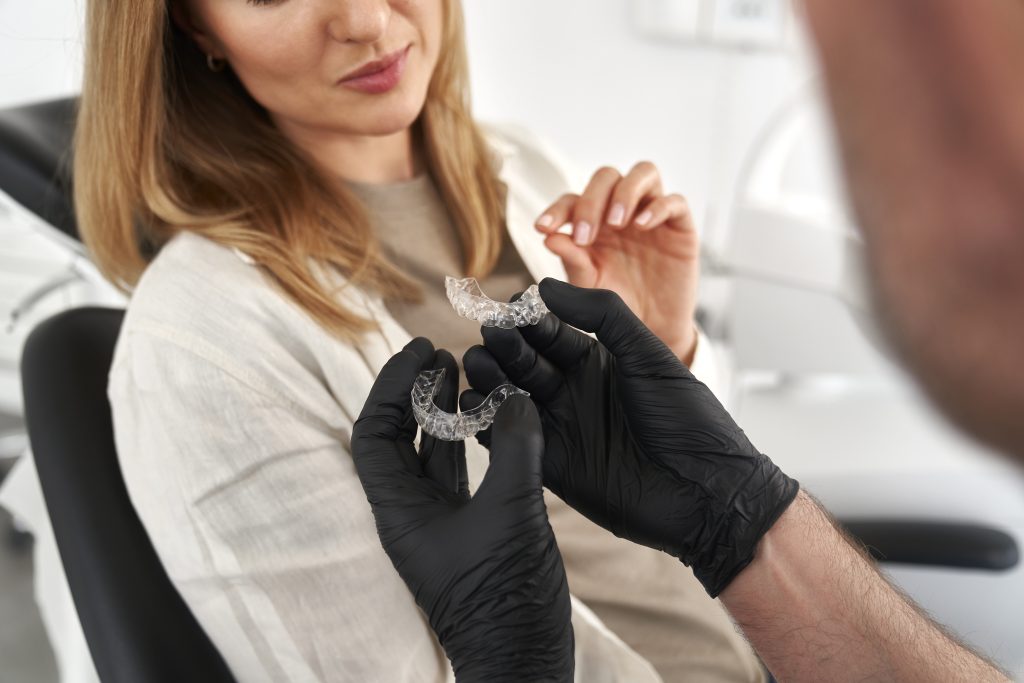
If you are considering orthodontic treatment, one of the most common questions patients ask is whether Invisalign or traditional braces are the better option. Both treatments are effective at straightening teeth, but they work in different ways and offer unique advantages.
At our dental office in Danville, VA, we help patients choose the orthodontic solution that best fits their lifestyle, goals, and oral health needs.
How Invisalign Works
Invisalign uses a series of clear, removable aligners to gradually move your teeth into proper alignment. Each set of aligners is custom-made and worn for one to two weeks before switching to the next set in the series.
Because Invisalign aligners are removable, patients can take them out for eating, brushing, and flossing. This flexibility makes Invisalign a popular choice for teens and adults who want a discreet orthodontic option.
How Traditional Braces Work
Traditional braces use metal brackets and wires to apply continuous pressure that moves teeth into their correct positions over time. Braces are fixed in place and adjusted periodically by your dentist to ensure progress throughout treatment.
Braces have been used for decades and are highly effective for treating a wide range of orthodontic concerns, including more complex alignment issues.
Appearance and Comfort
One of the biggest differences between Invisalign and braces is appearance. Invisalign aligners are clear and difficult to notice, making them a more discreet option. Braces, on the other hand, are visible and may be more noticeable when smiling or speaking.
In terms of comfort, Invisalign aligners are made from smooth plastic and tend to cause less irritation to the gums and cheeks. Braces may cause temporary discomfort after adjustments and can irritate soft tissues inside the mouth.
Daily Convenience and Oral Hygiene
Invisalign aligners can be removed for meals and oral hygiene, allowing patients to eat their favorite foods and brush and floss normally. This can make it easier to maintain good oral health during treatment.
With braces, certain foods may need to be avoided to prevent damage to brackets and wires. Brushing and flossing also require more time and attention due to the fixed hardware.
Treatment Time and Effectiveness
Both Invisalign and braces can deliver excellent results when worn as directed. Treatment time varies depending on the complexity of the case, but many Invisalign treatments take between 12 and 18 months, similar to traditional braces.
For more complex orthodontic issues, braces may sometimes be the more effective option. During your consultation, we will evaluate your specific needs and recommend the treatment that will provide the best outcome.
Cost Considerations
The cost of Invisalign and braces can be comparable, though pricing depends on the length of treatment and the complexity of tooth movement required. Insurance coverage and payment options may also vary between treatments.
We review all costs upfront and help patients understand their financial options so there are no surprises during treatment.
Invisalign vs Braces: Which Is Best for You?
Choosing between Invisalign and braces depends on several factors, including your orthodontic needs, lifestyle preferences, and commitment to wearing aligners as directed.
If you are unsure which option is right for you, a professional evaluation is the best way to make an informed decision. If you are considering Invisalign or braces in Danville, VA, we invite you to schedule a consultation with our dental team to discuss your goals and explore your treatment options.
Leave a reply